How I cosplay, African edition
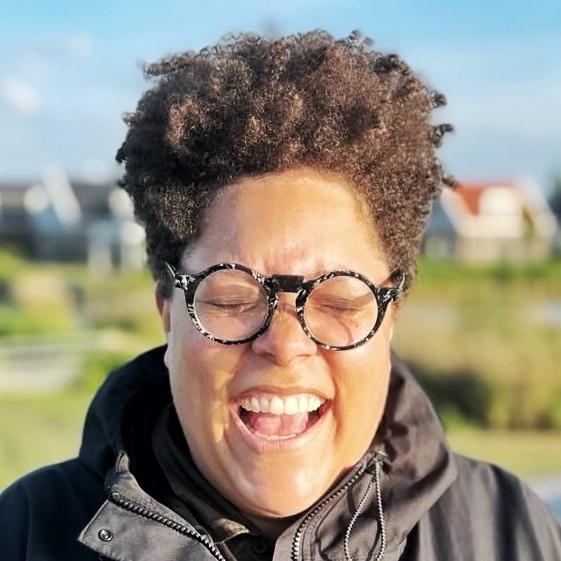
Today is Emancipation Day in the Netherlands, a day on which we commemorate the abolishment of slavery in our “former” colonies. There is a march, a ceremony by the national monument, and a festival known for its danceable music, long lines for great food, and lovely market. I’ve taken the day off, and will be going to Museumplein with a friend to celebrate, and to hopefully score a new wooden afro pick.
I don’t always participate in the Indieweb Carnival, but was delighted to meander to its wiki page and see that this month’s theme is Masks, Identities & Cosplay.
This whole essay would’ve been tied together irreproachably if I now introduced my opinions on the book White Masks, Black Skin by Frantz Fanon, a book which I’m sure describes in detail my most senior costume. But I shouldn’t be talking about the book in a way that indicates I know of its contents, because I haven’t read it yet.
I haven’t read much Fanon.
I haven’t read much Césaire.
I haven’t read much Said.
I haven’t read much De Kom.
I haven’t read much Baldwin.
I haven’t read much Vianen.
I haven’t read much Morrison.
I haven’t read much Gyasi.
I haven’t read much Trefossa.
I haven’t read much Butler.
I can list all of these names because they have been in my library since the day I moved in with Anja ten years ago. I am in love with the wokest white person I know. But I have yet to read more than ten pages in any of her books on anticolonialism, antiracism, and intergenerational trauma in the African diaspora. Reading Black literature, philosophy, poetry is hard.
Really, really hard.
It requires that I come up out of the deep water, take off my mask, and breathe freely.
Breathe freely and remember that I’m not the only person in the world who experiences racism. That I’m not alone as someone who was raised without their parent of colour, who struggles to be authentic in a world that signals that who they are isn’t quite up to standard. Someone who prefers to forget that they have “an identity” at all.
I can do it, but not for much longer than an hour. The discomfort is immense.
I was raised in a part of the world and in a time of the world where “Don’t be crazy, I don’t even see your skin colour” was a God-honest compliment. We know better now. We know that racism is baked into the unwritten rules of our societies, in the fabric of our ecosystems. We’re racist until we’re antiracist.
I was raised, taught, healthcare-provided by people who didn’t see my skin colour, because if they did see it, the only possible response was a negative one. And now, miles and years removed from the setting of my childhood, I’m surrounded by friendly, empathic and very intelligent White people who can meet my otherness with gentle curiosity. People who, unaware of the pervasiveness of microaggressions and racial trauma, stop empathising when they learn that their innocuous small talk can be painful, and that the road to hell is paved with good intentions.
My colour-blindness training wheels were screwed on at birth, and come in handy every day. I can’t bare to remember that I can only show up as my full self, African culture and African trauma hand-in-hand. The reality of it is uncomfortable, jarring, painful. Finding ways to be authentically me in a world that has — truly — screamed at me about the horrors of Blackness is the hardest thing I will ever do.
Cosplay suit for sale — worn out.